
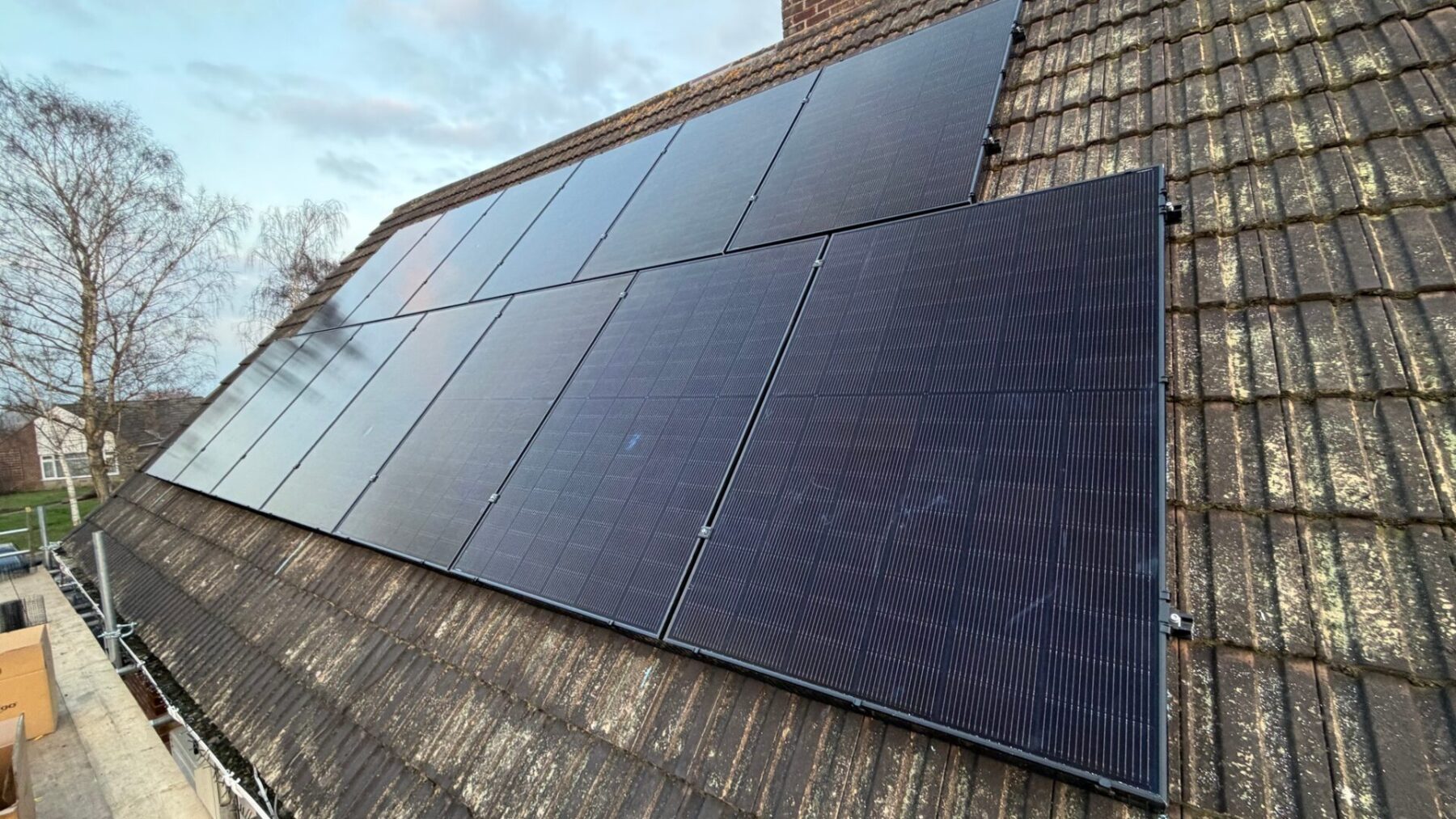
Investing in Solar Power
For many households, the case for solar has moved well beyond environmental goodwill. It’s now about resilience, control and long-term financial sense. With rising energy costs in the UK, ongoing instability in global fuel markets and a growing public appetite for cleaner technologies, more homeowners are asking whether now is the time to make the switch. The answer, increasingly, is yes.
Interest in solar has been building for years, but 2026 has sharpened the argument. The UK remains exposed to global gas and oil shocks because gas still plays a major role in setting electricity prices. At the same time, solar technology is well established, widely used and easier to justify financially than many homeowners assume. The Energy Saving Trust says there are now more than 1.3 million solar installations on homes across the UK, while a typical domestic system costs between £5,500 and £8,000 and can cut bills, lower carbon emissions and generate export income. It also notes that solar panels work even on cloudy days, which matters in a British context.
This wider awareness matters. Consumers are more familiar with renewables, more conscious of future energy shocks and more interested in technologies that reduce dependence on the grid. Octopus Energy says solar can help households gain greater control over home energy use, while its spring guidance highlights typical payback periods of around 9 to 13 years depending on system size and electricity usage. In other words, the case to Invest in solar power in the UK is not built on hype. It’s built on a combination of cost management, energy independence and practical long-term value.
How the Iran War is Driving Energy Prices Higher
The current geopolitical backdrop has made this case more urgent. The conflict involving Iran has become a major energy-market story because of its impact on supply routes and market confidence. Reuters reported on 14 April that the International Energy Agency had reversed its earlier forecasts and now saw world oil supply shrinking in 2026 as the war disrupted exports. The IEA described the conflict as the largest oil supply shock in history, with supply expected to fall by 1.5 million barrels per day this year. It also warned that resuming flows through the Strait of Hormuz remained the single most important factor in easing pressure on prices and the wider economy.
That route is crucial. Roughly a fifth of the world’s oil and liquefied natural gas normally passes through the Strait of Hormuz, so disruption there quickly ripples through wholesale markets. Reuters and the Guardian both reported that renewed tension around the waterway sent oil and gas prices higher again in late April. The Guardian said Brent crude rose about 5% to around $95 (£70) a barrel on 20 April after the seizure of an Iranian vessel hit peace hopes, while UK wholesale gas prices also rose. Reuters reported that domestic energy prices in Britain are poised to rise again from July to September because wholesale gas costs are about 30% higher than before the Iran conflict began.
For UK households, the problem is not abstract. Octopus Energy’s April 2026 explainer states that global gas prices spiked after the conflict sharply reduced supply and turned the Strait of Hormuz into a no-go zone. It also said it was forced to push up fixed prices sharply after the war started. This demonstrates how quickly global events influence domestic tariffs.
The government’s response underlines the seriousness of the issue. Reuters reported on 21 April that Britain is moving to weaken the link between electricity prices and volatile gas prices by offering fixed-price arrangements to existing low-carbon generators. The aim is to reduce exposure to fossil-fuel shocks and help lower consumer bills. This is effectively a public acknowledgement that UK energy security is too vulnerable to gas-driven volatility, and that renewables need to play a bigger role in shielding households.
Why Solar Power Offers Protection Against Energy Price Volatility
This is where solar stops being just a green upgrade – it becomes practical protection.
When you generate electricity at home, you reduce the amount you need to buy from the grid. This means less exposure to wholesale spikes caused by war, shipping disruption or international supply shortages. While solar doesn’t insulate a household from every cost in the system, it does reduce reliance on energy bought at market rates. The more power you use directly from your own roof, the less damage price volatility can do.
This is especially important in the UK, where electricity prices are still heavily influenced by gas. Octopus has argued that even green electricity is often priced according to gas costs because of the way the market works. Generating your own power therefore offers a kind of practical protection. You’re not waiting for politicians, regulators or global diplomacy to stabilise the market before you see some benefit. You’re producing part of your own supply at home.
This is also why the old objection that Britain is “not sunny enough” has lost force. The Energy Saving Trust emphasises that solar panels work on cloudy days and Octopus notes that 10 panels can still generate enough power to make 202 cups of tea on a winter day. Solar output will always be stronger in brighter months, but modern systems are viable in the UK climate. For many households, the real question is no longer “Are solar panels worth it in the UK?”, but how much value they can capture from the system over time.
How Much Can You Save with Solar Panels?
Savings depend on system size, location, how much electricity you use during the day and whether you export surplus power. Even so, the broad picture is encouraging.
The Energy Saving Trust says a typical home system costs around £6,100 to install. Its guidance shows payback periods commonly falling in roughly the 9 – 15-year range depending on location and occupancy patterns, with faster payback in some cases. It also highlights a real-life case study in which a household with 18 panels reported savings of around £750 a year. Octopus puts the payback range for its own systems at around 9 – 13 years depending on panel numbers and usage.
This means solar panel savings in the UK can be meaningful over the long term, especially when you spread the benefit over the 25‑year lifespan of your solar panels rather than a single year’s bills. After the payback point is reached, the system continues to deliver value for many years. Extra gains may also come through export tariffs, as excess electricity can be sold back to the grid under the Smart Export Guarantee (SEG).
There are also indirect financial benefits. Octopus says smart home technology can increase property value by 3% to 16% depending on property type, and solar can make an energy-efficient home more attractive to buyers and renters. While property uplift should not be the only reason to install panels, it strengthens the overall return-on-investment case.
The Role of Battery Storage in Maximising Value
Battery storage makes a strong solar system even stronger. Without a battery, some surplus daytime generation may be exported when it could otherwise be used later at home. With a battery, homeowners can store excess electricity and use it in the evening, overnight or during periods of higher import prices.
This improves self-consumption, reduces grid reliance further and helps households get more value from the electricity they generate. The Energy Saving Trust specifically points to the benefits of combining solar with battery storage, while we at South East Solar and Electrical highlight batteries as a way to store excess energy for use after dark or during a power outage. This is where solar battery investment becomes especially compelling: it helps turn solar from a daytime technology into an all-day energy strategy.
Battery-ready systems can also work well with smart tariffs, EV charging and future home electrification. For homeowners thinking beyond today’s bills, this flexibility matters.
Why Invest in Solar Panels Now?
Timing matters because the savings clock starts on installation day. The sooner a household installs solar, the sooner it begins generating electricity, reducing imports and softening the impact of future price rises.
The current backdrop strengthens that argument. UK oil prices in 2026 have been highly sensitive to events in the Middle East, while gas costs remain elevated and the UK government is explicitly trying to reduce consumer exposure to fossil-fuel shocks. Solar demand is unlikely to weaken if households continue looking for stability, lower bills and greater control. Waiting simply means another year of full exposure to a volatile market.
There’s also a practical seasonal angle. Longer spring and summer days help a new system start generating strongly from the outset, and Octopus has been actively promoting spring as an especially good time to install for exactly this reason.
Why Choose South East Solar – An Octopus Energy Partner
Choosing the right installer is as important as choosing the right technology. South East Solar and Electrical is a specialist in solar PV installation, maintenance and energy storage, serving domestic and commercial customers across the South East. We also offer EV charging solutions and finance options, giving homeowners a broader path into low-carbon living.
As an MCS-certified installer and Octopus Energy partner, we meet high reliability and technical competency standards, giving customers peace of mind. We also emphasise tailored system design, high-quality certified equipment, compatibility with Octopus smart tariffs and ongoing support. It’s a combination designed around your property and usage patterns rather than a one‑size‑fits‑all package.
If you’re considering solar panels, now is the time to explore your options. Here at South East Solar and Electrical, we provide expert guidance, a tailored consultation and a bespoke quote based on your roof, energy use and long-term goals.
Get in touch today to arrange an enquiry and take the first step towards cleaner power, lower bills and greater energy independence.
Recent Posts

The Future Homes Standard: What It Means for Solar Panels
Discover what the Future Homes Standard means for solar panels, new builds and homeowners as England moves towards more energy-efficient homes.

Are Solar Panels Worth It as Energy Prices Continue to Rise?
Are solar panels worth it? Discover how solar PV can cut energy bills, reduce grid reliance and provide long-term savings for your home.

Do Solar Panels Work During a Power Outage?
Do solar panels work during a power cut? Learn why most systems shut off and how battery storage can keep your home powered.